 Kyndle
 What Is Local SEO and How Does It Work? (2026)
What is local SEO and how does it work? A plain-language guide for small business owners on how to show up in Google Maps and near me searches.
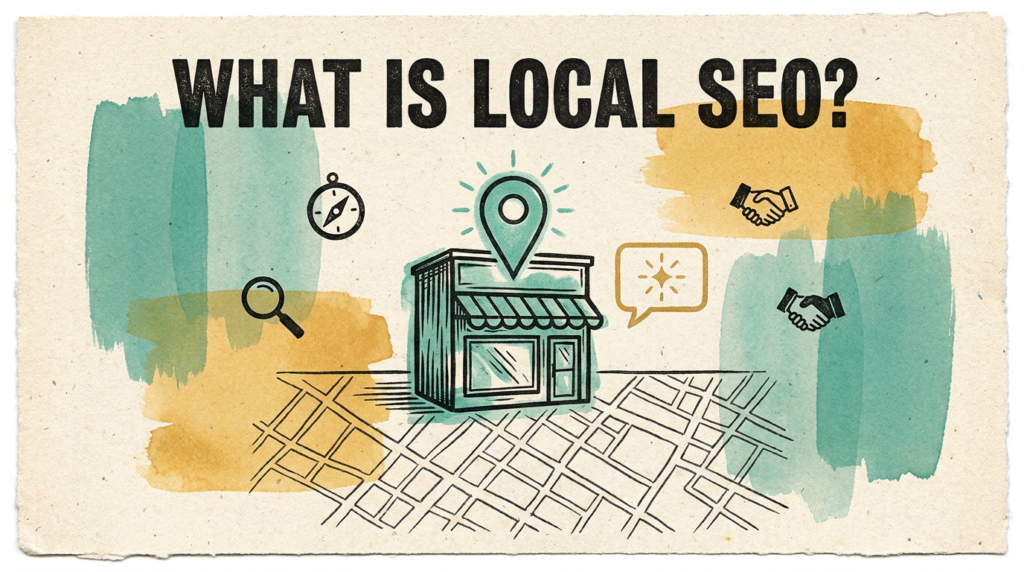
If you run a local business, local SEO is the difference between being found by the customer down the street and being invisible to them. This guide explains, in plain language, what local SEO actually is, how Google decides who shows up, the parts that matter most, and the big 2026 shift that most guides still miss. No jargon dumps, just how it really works.
What is local SEO?
Put simply, regular SEO helps you rank anywhere. Local SEO helps you rank for the people who can actually walk in or call. When someone in Lansing searches “plumber near me” or “best coffee shop in Lansing,” local SEO is what decides whether your business is one of the few they see.
How does local SEO work?
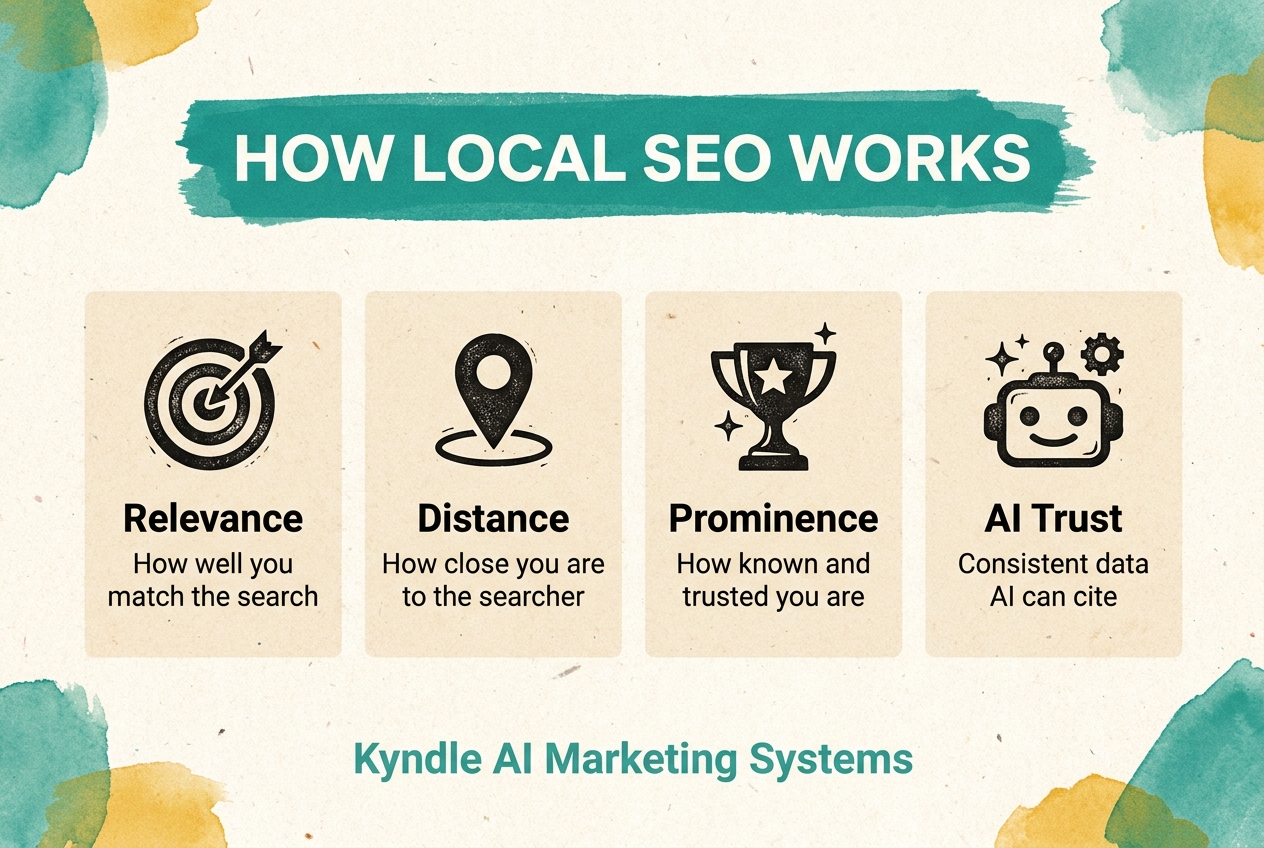
Google ranks local results using three main factors: relevance, proximity, and prominence. Everything you do in local SEO is really about strengthening one of these three signals. Understand them and the whole thing stops feeling like a mystery.
Relevance
Relevance is how well your business matches what someone is searching for. Google learns this from your Google Business Profile category, the services you list, and the words on your website. If you are a roofer but your profile is set to “general contractor,” Google may not show you for “roof repair,” no matter how good you are. Accurate, specific information is what makes you relevant.
Proximity
Proximity is how close your business is to the person searching. This is why results change as you move around town. You cannot move your building, but you can make your location crystal clear to Google and define the service area you actually cover, which helps you appear for the right nearby searches.
Prominence
Prominence is how well-known and trusted your business is. Google builds this from your reviews, your mentions across the web, your links, and how consistent your information is everywhere it appears. More genuine reviews and consistent listings tell Google you are a real, established business worth showing.
What are the main parts of local SEO?
Local SEO is not one task. It is a handful of moving parts that work together. Here is what actually goes into it.
- Google Business Profile: your single most important local asset. Claimed, verified, complete, and active.
- NAP consistency: your Name, Address, and Phone number identical everywhere online.
- Local citations: listings on directories like Yelp, Bing, Apple Maps, and industry sites.
- Reviews: a steady stream of real reviews, and replies to them.
- On-page local SEO: location and service pages with the right words and schema.
- Local content and links: pages and mentions that tie you to your community.
The 2026 shift: local search is now two searches, not one
Here is the part most guides still miss. Local SEO used to mean one thing: ranking in Google’s map pack and organic results. In 2026 it means two things, because people now search in two places at once.
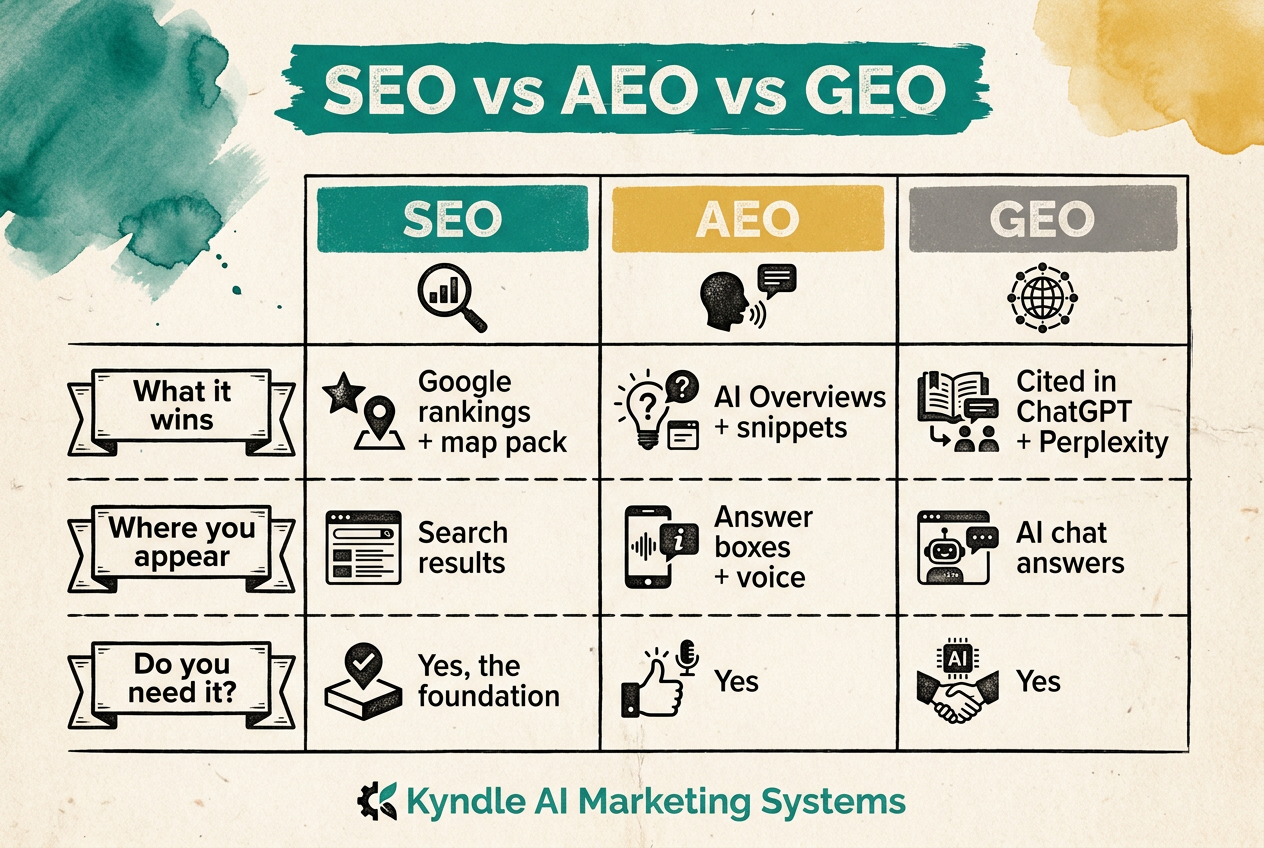
The first layer is traditional search: the map pack, Google Maps, and organic results. The second layer is AI search, and it has two parts. Answer Engine Optimization (AEO) is about showing up in AI Overviews, featured snippets, and voice answers. Generative Engine Optimization (GEO) is about being named when someone asks ChatGPT, Gemini, or Perplexity for the best option in their area. Both layers run on the same fuel: accurate, consistent, well-structured information. When your name, address, category, and services line up everywhere and your site answers questions clearly, you reduce Google’s uncertainty about who you are. That same clarity is what AI tools use to confidently recommend you. The opposite is also true: inconsistent information makes AI leave you out, because it cannot trust what it cannot verify. This is not a far-off trend. Gartner projects traditional search volume will drop about 25 percent by 2026 as people shift to AI answer tools. The businesses that build for both layers now win the next few years. That two-layer build is the core of our local SEO work.
How do you optimize your Google Business Profile?
Your Google Business Profile is the single biggest lever in local SEO, so it is worth getting right. A complete, active profile can lift your visibility faster than almost anything else. Here is what to do.
- Claim and verify it so Google trusts that you are real.
- Choose the most specific primary category, then add relevant secondary ones.
- Fill in every field: hours, services, service area, website, and a real description.
- Add real photos of your team, work, and location, and keep adding them.
- Post updates regularly, the same way you would on social media.
- Earn and answer reviews, which feed both relevance and prominence.
Keep it current. A profile that is complete and active signals to Google that you are an established, trustworthy business, and that same completeness is what lets AI tools recommend you with confidence.
How long does local SEO take to work?
Local SEO is a build, not a switch, but it is often faster than people expect. Simple fixes like claiming and completing your Google Business Profile or correcting your category can lift visibility within days to a few weeks. Broader gains in competitive searches usually take two to six months as reviews grow and consistency builds. The encouraging part: local SEO compounds. Once you rank, steady upkeep keeps you there far more cheaply than starting from zero.
Local SEO vs regular SEO: what is the difference?
They overlap, but the goals differ. Regular SEO chases broad rankings anywhere. Local SEO targets nearby, ready-to-buy customers and adds the Google Business Profile and map layer that regular SEO ignores.
| Criteria | Local SEO | Regular SEO |
|---|---|---|
| Main goal | Win nearby, near-me customers | Rank for broad national terms |
| Who it targets | People in your service area | Anyone, anywhere |
| Where you show up | Map pack, Maps, and local results | Standard organic results |
| Best for | Local service businesses | Ecommerce and national brands |
| Buyer intent | High, ready to call | Mixed |
Can you do local SEO yourself?
Yes, the basics are very doable. Claim and complete your Google Business Profile, make your name, address, and phone identical everywhere, ask happy customers for reviews and reply to them, and write clear service and location pages. That alone puts you ahead of many local competitors. The harder parts, like building prominence in competitive searches and structuring your site for AI search, are where most owners bring in help so they can stay focused on the work itself.
Want to see how this works for your business?
We build local SEO systems for Lansing service businesses that win both layers of search, the map pack and AI answers. Book a free strategy call and we will map it to your goals.
The bottom line
Local SEO is how nearby customers find you, and it works by proving to Google that you are relevant, close, and trusted. Get your Google Business Profile, consistent information, reviews, and local pages right, and you show up where it counts. In 2026, build for both layers, traditional ranking and AI search, and you stay ahead as search keeps changing. When you are ready to hire help, see what to look for in local SEO services in Lansing, or if you are already missing from the map, read why your business isn’t showing up on Google Maps.
What is local SEO in simple terms?
How does Google decide local rankings?
Is Google Business Profile the same as local SEO?
How long does local SEO take to work?
Does local SEO still matter with AI search?